Site · Pipelines
Pipeline Overview
Last updated 18 November 2026
Pipelines give your team a structured, visual way to manage any process that moves work from one stage to the next. This could be a sales deal, a job application, a project approval, or a client onboarding journey.
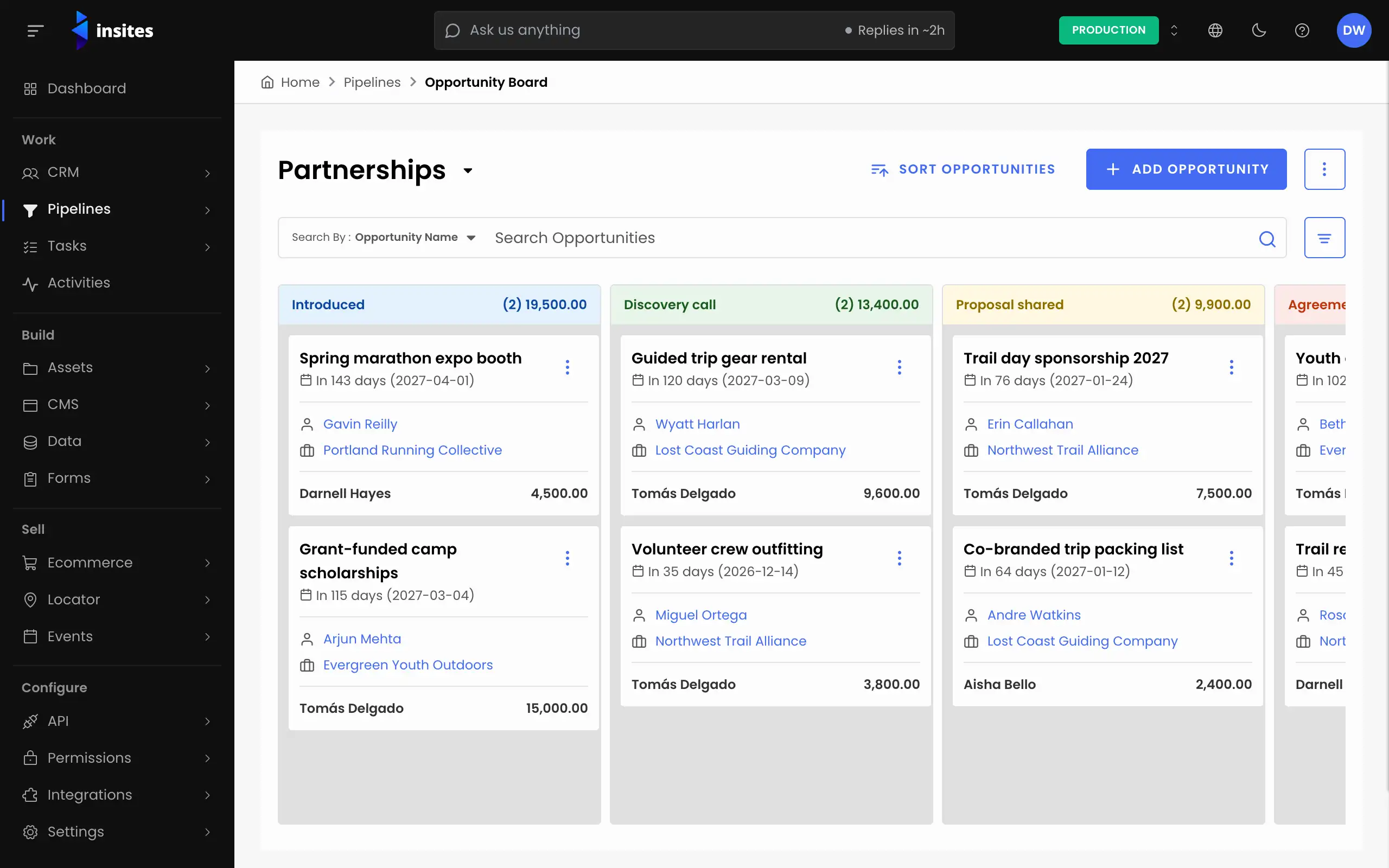
Each pipeline is made up of stages that represent the milestones in your process. Opportunities are created and assigned to a pipeline, then tracked as they progress through each stage until they are won, lost, or withdrawn.
Key concepts
Before working with pipelines, it helps to understand the three core building blocks:
- Pipelines are the top-level container for a process. You can have multiple pipelines to represent different workflows across your organization.
- Pipeline Stages are the milestones within a pipeline. Each stage appears as a column on the board and represents a step in your process.
- Opportunities are the individual items that move through a pipeline. An opportunity can represent a deal, an application, a request, or any unit of work your team is tracking.
What you can do with pipelines
Pipelines are designed to give your team visibility, structure, and control over your processes. Here is an overview of its capabilities:
- Define stages: Build out the steps in your process by creating and reordering stages within a pipeline.
- Track opportunities: Add opportunities to a pipeline and move them through stages using the drag-and-drop board view or the table view.
- Log activities and tasks: Attach activities and tasks to opportunities to keep a clear record of actions taken and next steps required.
- Manage related contacts: Associate CRM contacts with an opportunity to keep stakeholders connected to the relevant deals.
- Connect form submissions: Link form submissions to opportunities for streamlined lead management directly within the pipeline.
- Integrate with Ecommerce: Associate opportunities with Ecommerce orders to see the full picture of a customer's journey.
Continue learning
Explore the articles below to start building and managing your Pipelines: